System Design : Load Balancer vs Reverse Proxy vs Forward Proxy vs API Gateway

Welcome to the 229 new who have joined us since last edition!
If you aren’t subscribed yet, join smart, curious folks by subscribing below.
Thanks for reading Rocky’s Newsletter ! Subscribe for free to receive new posts and support my work.
Thanks for reading Rocky’s Newsletter ! Subscribe for free to receive new posts and support my work.
In the intricate architecture of network communications, the roles of Load Balancers, Reverse Proxies, Forward Proxies, and API Gateways are pivotal. Each serves a distinct purpose in ensuring efficient, secure, and scalable interactions within digital ecosystems. As organisations strive to optimise their network infrastructure, it becomes imperative to understand the nuanced functionalities of these components. In this comprehensive exploration, we will dissect Load Balancers, Reverse Proxies, Forward Proxies, and API Gateways, shedding light on how they work, their specific use cases, and the unique contributions they make to the world of network technology.
Load Balancer:
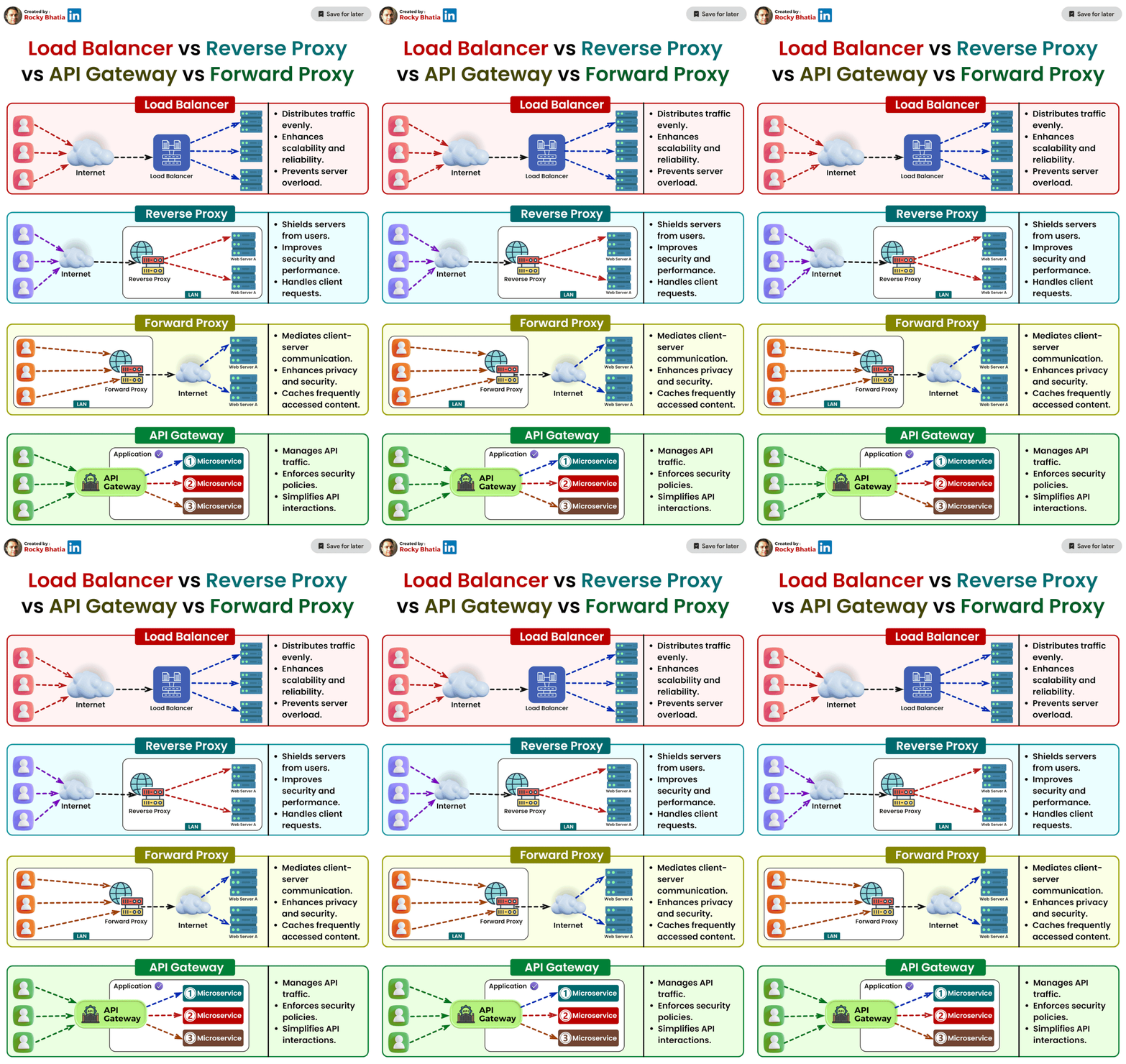
Overview: A Load Balancer acts as a traffic cop, distributing incoming network requests across multiple servers to ensure no single server is overwhelmed. This not only optimises resource utilisation but also enhances the scalability and reliability of web applications.
How it Works:
A load balancer acts as a traffic cop, directing incoming requests to different servers based on various factors. These factors include:
Server load: Directing traffic to less busy servers.
Server health: Ensuring requests are sent to healthy servers.
Round-robin: Distributing traffic evenly among servers.
Least connections: Sending requests to the server with the fewest active connections.

Once a request is sent to a server, the server processes the request and sends a response back to the load balancer, which then forwards it to the client.
Benefits of Load Balancing
Improved performance: By distributing traffic across multiple servers, load balancers can significantly improve website or application speed.
Increased availability: If one server fails, the load balancer can redirect traffic to other available servers, minimising downtime.
Enhanced scalability: Load balancers can handle increasing traffic by adding more servers to the pool.
Optimised resource utilisation: By evenly distributing traffic, load balancers prevent server overload and maximise resource efficiency.
Types of Load Balancers
There are two main types of load balancers:
Hardware load balancers: Dedicated devices with high performance and reliability.
Software load balancers: Software applications that can run on servers, virtual machines, or in the cloud.
Real-world Applications
Load balancers are used in a wide range of applications, including:
E-commerce websites: Handling high traffic during sales or promotions.
Online gaming platforms: Ensuring smooth gameplay for multiple players.
Cloud computing environments: Distributing workloads across virtual machines.
Content delivery networks (CDNs): Optimising content delivery to users worldwide.
Reverse Proxy:
Overview: A Reverse Proxy serves as an intermediary between client devices and web servers. It receives requests from clients on behalf of the servers, acting as a gateway to handle tasks such as load balancing, SSL termination, and caching.
How it Works: How Does it Work?
When a client requests a resource, the request is directed to the reverse proxy. The proxy then fetches the requested content from the origin server and delivers it to the client. This process provides several benefits:
Load balancing: Distributes incoming traffic across multiple origin servers.
Caching: Stores frequently accessed content locally, reducing response times.
Security: Protects origin servers by acting as a shield against attacks.
SSL termination: Handles SSL/TLS encryption and decryption, offloading the process from origin servers.
Benefits of a Reverse Proxy
Improved performance: Caching and load balancing enhance website speed.
Enhanced security: Protects origin servers from attacks like DDoS and SQL injection.
Scalability: Handles increased traffic without impacting origin servers.
Flexibility: Allows for A/B testing and geo-location routing.
Common Use Cases
Content Delivery Networks (CDNs): Distributes content across multiple locations for faster delivery.
Web application firewalls (WAFs): Protects web applications from attacks.
Load balancing: Distributes traffic across multiple servers.
API gateways: Manages API traffic and security.
Forward Proxy:
Overview: A Forward Proxy, also known simply as a proxy, acts as an intermediary between client devices and the internet. It facilitates requests from clients to external servers, providing functionalities such as content filtering, access control, and anonymity.
How Does it Work?
When a client wants to access a resource on the internet, it sends a request to the forward proxy. The proxy then fetches the requested content from the origin server and delivers it to the client. This process involves several steps:
Client connects to the proxy server.
Client sends a request to the proxy.
Proxy forwards the request to the origin server.
Origin server sends the response to the proxy.
Proxy forwards the response to the client.
Benefits of a Forward Proxy
Caching: Stores frequently accessed content locally, reducing response times.
Security: Protects clients by filtering malicious content and hiding their IP addresses.
Access control: Restricts internet access based on user or group policies.
Anonymity: Allows users to browse the internet without revealing their identity.
Common Use Cases
Content filtering: Blocks access to inappropriate or harmful websites.
Parental control: Restricts online activities for children.
Corporate network security: Protects internal networks from external threats.
Anonymity: Enables users to browse the internet privately.
API Gateway:
Overview: An API Gateway is a server that acts as an API front-end, receiving API requests, enforcing throttling and security policies, passing requests to the back-end service, and then passing the response back to the requester. It serves as a central point for managing, monitoring, and securing APIs.
How Does it Work?
Request Reception: The API Gateway receives API requests from clients.
Request Processing: It processes the request, applying policies like authentication, authorisation, rate limiting, and caching.
Routing: The gateway forwards the request to the appropriate backend service based on defined rules.
Response Aggregation: It aggregates responses from multiple services, if necessary, and returns a unified response to the client.
Benefits of an API Gateway
Improved performance: Caching, load balancing, and request aggregation can enhance performance.
Enhanced security: Provides a centralised point for enforcing security policies.
Simplified development: Isolates clients from backend complexities.
Monetisation and analytics: Enables tracking API usage and generating revenue.
Common Use Cases
Microservices architectures: Manages communication between multiple microservices.
Mobile app development: Provides a unified interface for mobile apps to access backend services.
API management: Enforces API policies, monitors usage, and generates analytics.
IoT applications: Handles a large number of devices and data streams.
Key Features of an API Gateway
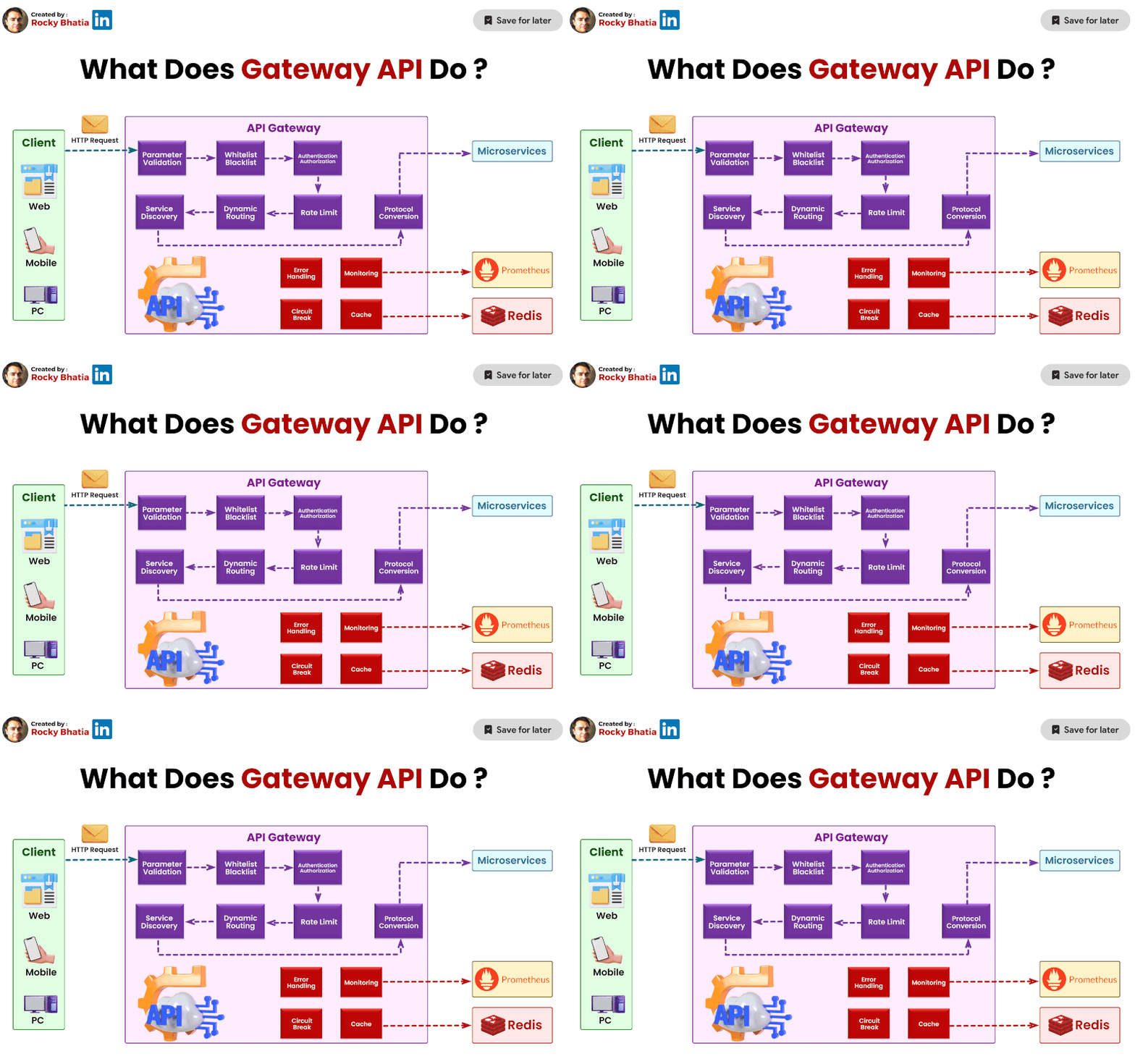
Authentication and authorisation: Verifies user identity and permissions.
Rate limiting: Prevents API abuse through throttling.
Caching: Improves performance by storing frequently accessed data.
Load balancing: Distributes traffic across multiple backend services.
API versioning: Manages different API versions.
Fault tolerance: Handles failures gracefully.
Monitoring and analytics: Tracks API usage and performance.
Conclusion:
In the intricate web of network components, Load Balancers, Reverse Proxies, Forward Proxies, and API Gateways play distinct yet interconnected roles. Load Balancers ensure even distribution of traffic to optimise server performance, while Reverse Proxies act as intermediaries for clients and servers, enhancing security and performance.
Forward Proxies, on the other hand, serve as gatekeepers between client devices and the internet, enabling content filtering and providing anonymity. Lastly, API Gateways streamline the management, security, and accessibility of APIs, serving as centralised hubs for diverse services.
Understanding the unique functionalities of these components is essential for organisations seeking to build robust, secure, and scalable network infrastructures. As technology continues to advance, the synergy of Load Balancers, Reverse Proxies, Forward Proxies, and API Gateways will remain pivotal in shaping the future of network architecture.
Hope you enjoyed reading this article.
If you found it valuable, hit a like and consider subscribing for more such content every week.
If you have any questions or suggestions, leave a comment.
This post is public so feel free to share it.
Subscribe for free to receive new articles every week.
Thanks for reading Rocky’s Newsletter ! Subscribe for free to receive new posts and support my work.
I actively post coding, system design and software engineering related content on
Spread the word and earn rewards!
If you enjoy my newsletter, share it with your friends and earn a one-on-one meeting with me when they subscribe. Let's grow the community together.
I hope you have a lovely day!
See you soon,
Rocky
Thanks for reading Rocky’s Newsletter ! Subscribe for free to receive new posts and support my work.
View draft history
Settings