

Inside Netflix’s Architecture: How It Handles Billions of Views Seamlessly

Welcome to the 389 new who have joined us since last edition!
Netflix is a prime example of a highly scalable and resilient distributed system. With over 260 million subscribers globally, Netflix streams content to millions of devices, ensuring low latency, high availability, and seamless user experience. But how does Netflix achieve this at such an enormous scale? Let’s dive deep into its architecture, breaking down the key technologies and design choices that power the world’s largest streaming platform.
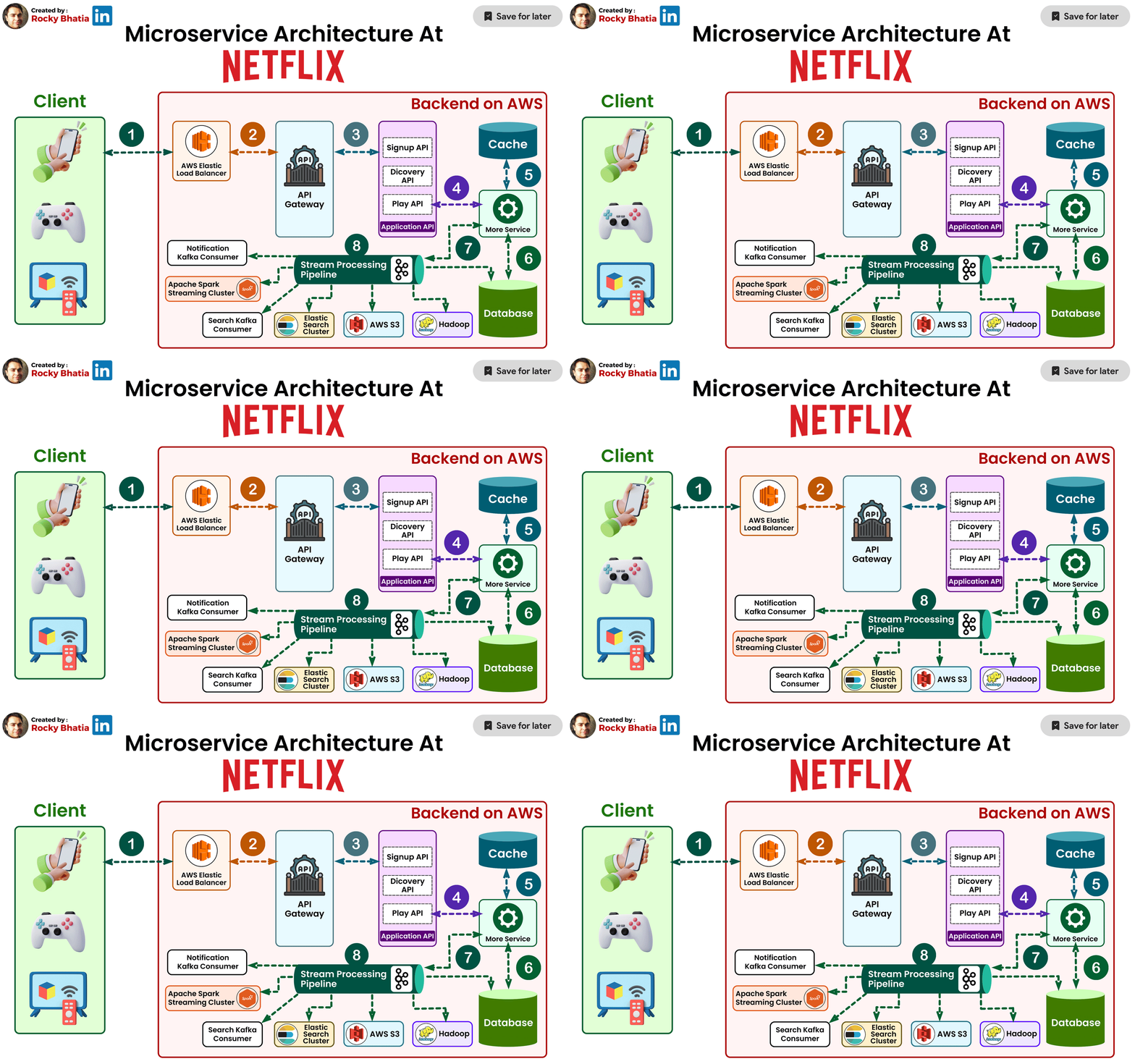
1. Microservices and Distributed System Design
Netflix follows a microservices-based architecture, where independent services handle different functionalities, such as:
User Authentication – Validates and manages user accounts, including password resets, MFA, and session management.
Content Discovery – Powers search, recommendations, and personalized content using real-time machine learning models.
Streaming Service – Manages video delivery, adaptive bitrate streaming, and content buffering to ensure smooth playback.
Billing and Payments – Handles subscriptions, regional pricing adjustments, and fraud detection.
Each microservice runs independently and communicates via APIs, ensuring high availability and scalability. This architecture allows Netflix to roll out updates seamlessly, preventing single points of failure from affecting the entire system.
Why Microservices?
Scalability: Each service scales independently based on demand.
Resilience: Failures in one service do not bring down the entire system.
Rapid Development: Teams can work on different services simultaneously without dependencies slowing them down.
Global Distribution: Services are deployed across multiple AWS regions to reduce latency.
🚀 Exciting News! Starting this week, I’ll be adding one tech video every week on my YouTube channel!
If you're passionate about tech, system design, AI, and engineering insights, you won’t want to miss this.
2. Netflix’s Cloud Infrastructure – AWS at Scale
Netflix operates entirely on Amazon Web Services (AWS), leveraging the cloud for elasticity and reliability. Some key AWS services powering Netflix include:
EC2 (Elastic Compute Cloud): Provides scalable virtual machines for compute-heavy tasks like encoding and data processing.
S3 (Simple Storage Service): Stores video assets, user profiles, logs, and metadata.
DynamoDB & Cassandra: NoSQL databases for storing user preferences, watch history, and metadata, ensuring low-latency reads and writes.
AWS Lambda: Runs serverless functions for lightweight, event-driven tasks such as real-time analytics and log processing.
Elastic Load Balancing (ELB): Distributes incoming traffic efficiently across multiple microservices and prevents overload.
Kinesis & Kafka: Event streaming platforms for real-time data ingestion, powering features like personalized recommendations and A/B testing.
Netflix’s cloud-native approach allows it to rapidly scale during peak traffic (e.g., when a new show drops) and ensures automatic failover in case of infrastructure issues.
3. Content Delivery at Scale – Open Connect
A core challenge for Netflix is streaming high-quality video to users without buffering or delays. To solve this, Netflix built its own Content Delivery Network (CDN) called Open Connect. Instead of relying on third-party CDNs, Netflix places cache servers (Open Connect Appliances) in ISPs’ data centers, bringing content closer to users.
Benefits of Open Connect:
Lower Latency: Content is streamed from local ISP servers rather than distant cloud data centers.
Reduced ISP Bandwidth Usage: By caching popular content closer to users, Netflix reduces congestion on internet backbone networks.
Optimized Streaming Quality: Ensures 4K and HDR content delivery with minimal buffering.
Netflix’s edge caching approach significantly improves the user experience while cutting costs on bandwidth-heavy cloud operations.
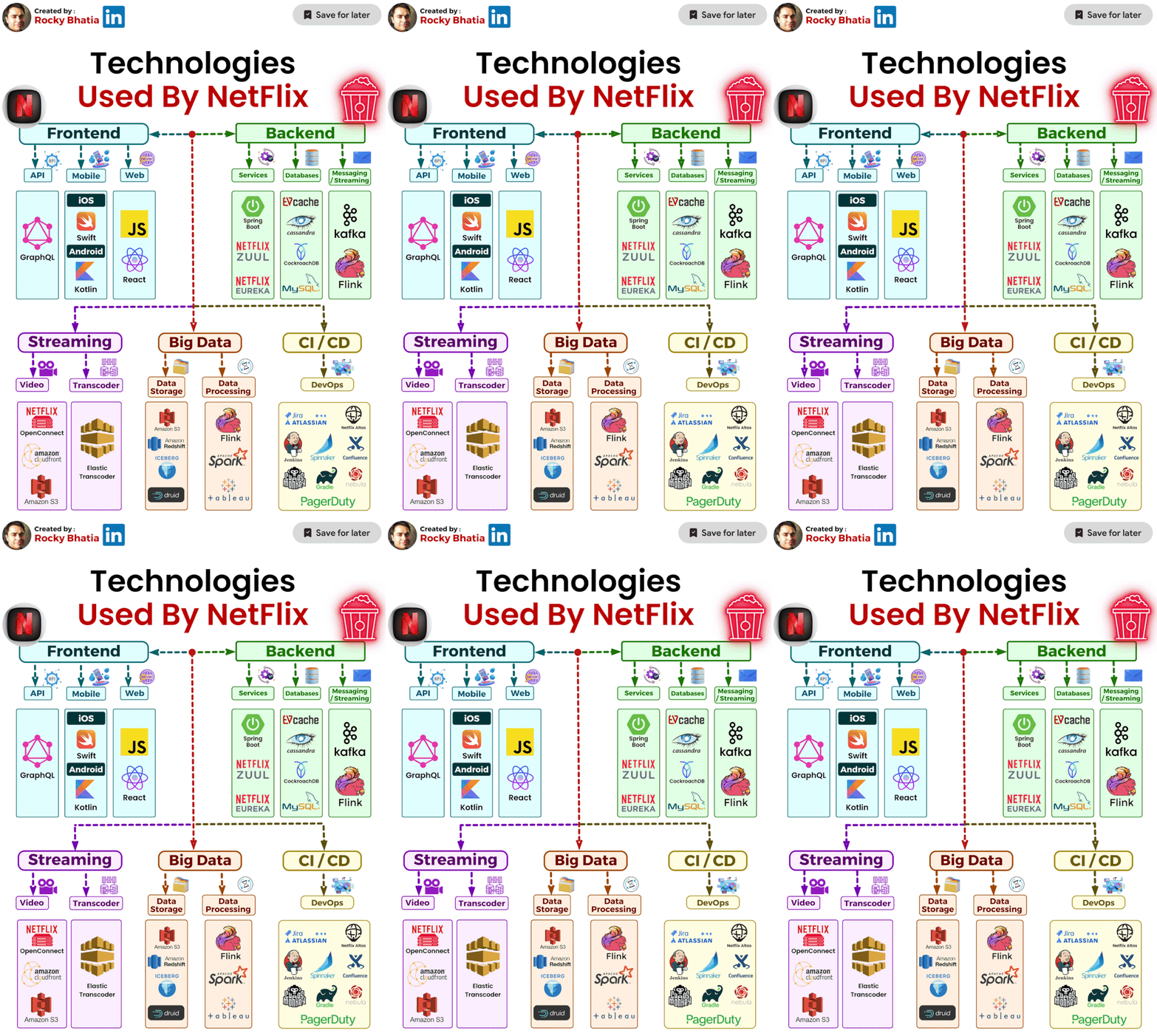
4. Netflix’s Tech Stack – From Frontend to Streaming Infrastructure
Netflix employs a vast and robust tech stack covering frontend, backend, databases, streaming, and CDN services.
Frontend Technologies:
React.js & Node.js – The Netflix UI is built using React.js for dynamic rendering, with Node.js supporting server-side rendering.
Redux & RxJS – For state management and handling asynchronous data streams.
GraphQL & Falcor – Efficient data-fetching mechanisms to optimize API responses.
Backend Technologies:
Java & Spring Boot – Most microservices are built using Java with Spring Boot.
Python & Go – Used for various backend services, especially in machine learning and observability tools.
gRPC & REST APIs – High-performance communication between microservices.
Databases & Storage:
DynamoDB & Cassandra – NoSQL databases for user preferences, watch history, and metadata storage.
MySQL – Used for transactional data such as billing and payments.
S3 & EBS (Elastic Block Store) – For storing logs, metadata, and assets.
Event-Driven Architecture:
Apache Kafka & AWS Kinesis – Handles event streaming, real-time analytics, and log processing.
Streaming Infrastructure:
FFmpeg – Used for video encoding and format conversion.
VMAF (Video Multi-Method Assessment Fusion) – Netflix’s AI-powered quality assessment tool to optimize streaming quality.
DASH & HLS Protocols – Adaptive bitrate streaming protocols to adjust video quality dynamically.
Content Delivery – Open Connect CDN:
Netflix has built its own CDN (Content Delivery Network), Open Connect, which:
Deploys dedicated caching servers at ISP locations.
Reduces network congestion and improves video streaming quality.
Uses BGP routing to optimize data transfer to end users.
Observability & Performance Monitoring:
Atlas – Netflix’s real-time telemetry platform.
Eureka – Service discovery tool for microservices.
Hystrix – Circuit breaker for handling failures.
Zipkin – Distributed tracing to analyze request flow across services.
Spinnaker – Manages multi-cloud deployments.
Security & Digital Rights Management (DRM):
Widevine, PlayReady, and FairPlay DRM – To protect digital content from piracy.
Token-Based Authentication – Ensures secure API calls between microservices.
AI-powered Fraud Detection – Uses machine learning to prevent credential stuffing and account sharing abuse.
5. Resilience and Fault Tolerance – Chaos Engineering
Netflix ensures high availability using Chaos Engineering, a discipline where failures are deliberately introduced to test system resilience. Their famous Chaos Monkey tool randomly shuts down services to verify automatic recovery mechanisms. Other tools in their Simian Army include:
Latency Monkey: Introduces artificial delays to simulate network slowdowns.
Conformity Monkey: Detects non-standard or misconfigured instances and removes them.
Chaos Gorilla: Simulates the failure of entire AWS regions to test system-wide resilience.
Why Chaos Engineering?
Netflix must be prepared for unexpected failures, whether caused by network issues, cloud provider outages, or software bugs. By proactively testing failures, Netflix ensures that users never experience downtime.
6. Personalisation & AI – The Brain Behind Netflix Recommendations
Netflix’s recommendation engine is powered by Machine Learning and Deep Learning algorithms that analyze:
Watch history – What users have previously watched.
User interactions – Browsing behavior, pauses, skips, and rewatches.
Content metadata – Genre, actors, directors, cinematography styles, and even scene compositions.
Collaborative filtering – Finds similar users and suggests content based on shared preferences.
Contextual Bandit Algorithms – A form of reinforcement learning that adjusts recommendations in real-time based on user feedback.
Netflix employs A/B testing at scale, ensuring that every UI change, recommendation tweak, or algorithm update is rigorously tested before a full rollout.
7. Observability & Monitoring – Tracking Millions of Events per Second
With millions of users watching content simultaneously, Netflix must track system performance in real time. Key monitoring tools include:
Atlas – Netflix’s real-time telemetry platform for tracking system health.
Eureka – Service discovery tool for routing traffic between microservices.
Hystrix – Circuit breaker library to prevent cascading failures.
Spinnaker – Automated deployment tool for rolling out software updates seamlessly.
Zipkin – Distributed tracing tool to analyze request flow across microservices.
This observability stack allows Netflix to proactively detect anomalies, reducing the risk of performance degradation.
8. Security & Privacy – Keeping Netflix Safe
Netflix takes security seriously, implementing:
End-to-End Encryption: Protects user data and streaming content from unauthorized access.
Multi-Factor Authentication (MFA): Prevents account takeovers.
Access Control & Role-Based Policies: Restricts employee access to sensitive services.
DRM (Digital Rights Management): Prevents unauthorized content distribution through watermarking and encryption.
Bot Detection & Fraud Prevention: Identifies and blocks credential stuffing attacks and account sharing abuse.
Final Thoughts – Why Netflix’s Architecture is a Gold Standard
Netflix’s ability to handle millions of concurrent users, deliver content with ultra-low latency, and recover from failures automatically is a testament to its world-class distributed system architecture. By leveraging cloud computing, microservices, machine learning, chaos engineering, and edge computing, Netflix has set the benchmark for high-scale applications.
What’s Next?
Netflix is constantly evolving. With the rise of AI-generated content, 5G streaming, and interactive entertainment, its architecture will likely undergo further optimisations.
Would you like a deep dive into any specific Netflix component? Let me know what interests you most!
Hope you enjoyed reading this article.
If you found it valuable, hit a like and consider subscribing for more such content every week.
If you have any questions or suggestions, leave a comment.
This post is public so feel free to share it.
Subscribe for free to receive new articles every week.
Thanks for reading Rocky’s Newsletter ! Subscribe for free to receive new posts and support my work.
I actively post coding, system design and software engineering related content on
Spread the word and earn rewards!
If you enjoy my newsletter, share it with your friends and earn a one-on-one meeting with me when they subscribe. Let's grow the community together.
I hope you have a lovely day!
See you soon,
Rocky
Hello, Can you Explain more on Billing and Payments Part in tech stack of Netflix, How it happens and how the PSP's Will integrate with the Payment System