

DevOps Crash Cours: The Engine of Modern Software Delivery
DevOps: The Engine of Modern Software Delivery

Refer just few people & Get a chance to connect 1:1 with me for career guidance
Welcome to the DevOps Crash Course ! Whether you're a beginner or a seasoned engineer, this guide will help you understand Devops from its basic concepts to its architecture, internals, and real-world applications.
Give yourself only 10 mins and then you will comfortable in Devops
DevOps has transformed the way teams deliver software by fostering collaboration, automation, and continuous improvement. In today’s competitive landscape, mastering DevOps practices is key to delivering high-quality software at scale. Let’s explore six pivotal components of DevOps, enriched with insights and real-world examples, followed by a deep dive into the CI/CD pipeline journey and a streamlined DevOps workflow.
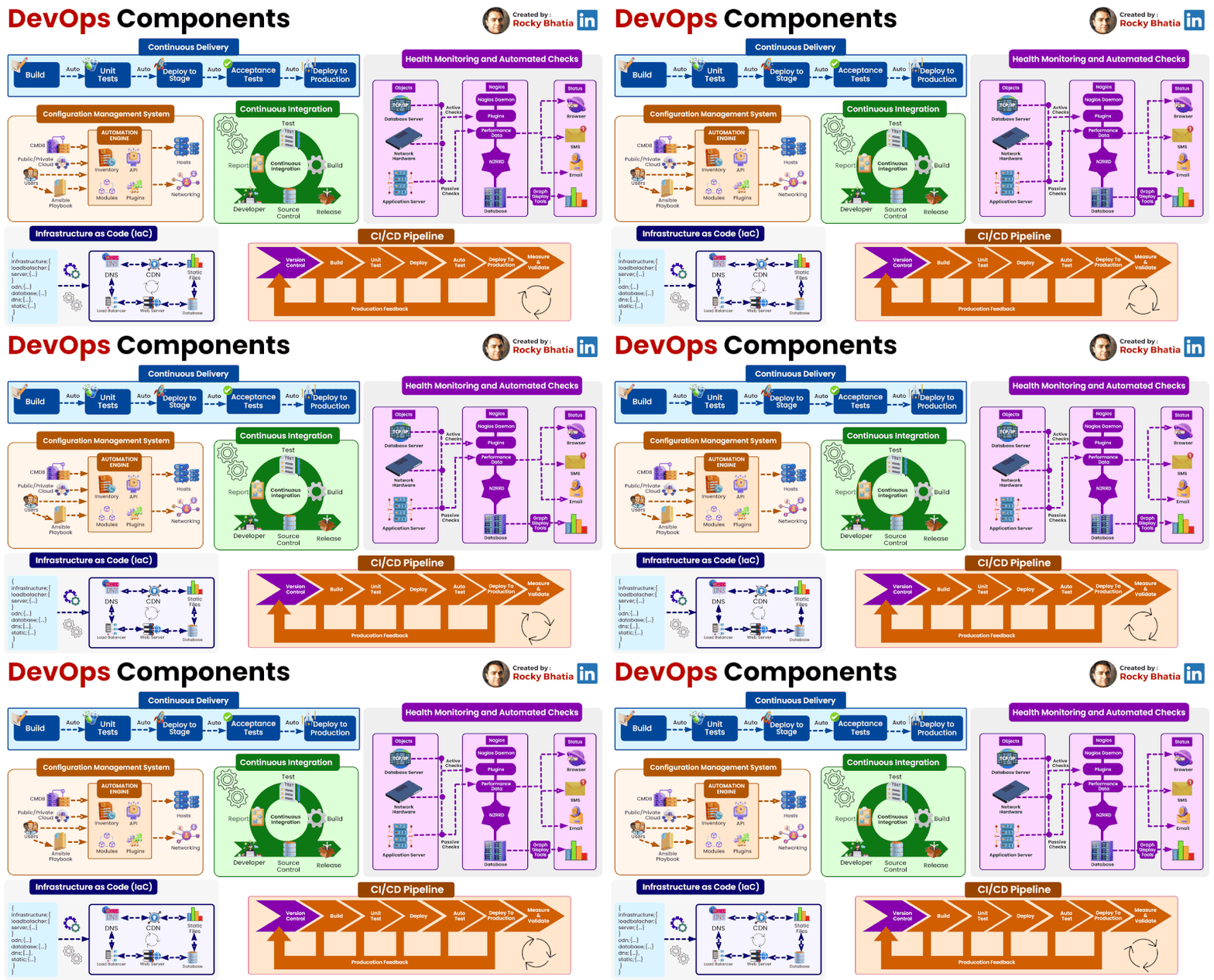
1. Continuous Integration (CI)
At the heart of DevOps lies Continuous Integration (CI), a practice that automates code integration to detect and resolve issues early.
Advanced Insight: Beyond merging code, CI can integrate static code analysis, security vulnerability scanning, and performance benchmarking. Tools like SonarQube enforce coding standards, while Snyk identifies security flaws.
Real-World Example: Amazon uses CI pipelines powered by tools like CodePipeline and CodeBuild to manage contributions from thousands of developers working on microservices. Automated performance tests prevent issues like inefficient database queries from impacting production.
2. Continuous Delivery (CD)
Extending CI, Continuous Delivery automates the release process, ensuring every application version is production-ready.
Advanced Insight: Techniques like blue-green deployments, feature toggles, and canary releases test features with small user bases before full rollouts. Rollback mechanisms safeguard deployments.
Real-World Example: Spotify leverages CD pipelines to roll out daily updates. Canary releases test features like UI changes with a subset of users, reducing risk while maintaining high availability.
3. Configuration Management
Manual infrastructure configuration is prone to errors. Tools like Ansible, Chef, or Puppet ensure consistency and efficiency.
Advanced Insight: GitOps, a declarative approach, uses Git as the single source of truth for managing infrastructure changes, particularly in multi-cloud environments.
Real-World Example: A financial institution uses Puppet to enforce compliance across thousands of servers. Every change, from security updates to software patches, is tracked and applied uniformly.
4. Infrastructure as Code (IaC)
IaC treats infrastructure as code, enabling reproducibility and scalability through tools like Terraform and AWS CloudFormation.
Advanced Insight: Advanced IaC practices include reusable modules and policy-as-code tools like HashiCorp Sentinel for governance. Multi-region deployments become seamless.
Real-World Example: Airbnb uses Terraform to dynamically provision additional infrastructure during peak travel seasons, ensuring seamless performance for millions of users globally.
5. Health Monitoring and Automated Checks
Monitoring system health is vital for reliability. Tools like Prometheus, Nagios, and Datadog provide real-time insights and issue detection.
Advanced Insight: Observability tools like Grafana and OpenTelemetry go beyond monitoring by correlating logs, metrics, and traces for root-cause analysis. AI-driven anomaly detection predicts failures.
Real-World Example: A logistics company uses Prometheus to monitor metrics like API response times. Automated alerts ensure latency issues are resolved before they affect customers.
6. Comprehensive CI/CD Pipelines
CI/CD pipelines streamline software delivery from code commit to production, integrating security, performance, and compliance checks.
Advanced Insight: Dynamic infrastructure provisioning, dependency scanning, and Kubernetes-native pipeline automation (e.g., with ArgoCD) enhance robustness.
Real-World Example: A banking application provider integrates Jenkins and Kubernetes in their CI/CD pipeline to deploy securely while managing secrets with HashiCorp Vault.
DevOps Workflow: Streamlining Software Delivery

A streamlined DevOps workflow is the backbone of efficient software delivery. Here’s a breakdown of the key stages:
Code Checkout: Developers retrieve code from version control (e.g., Git).
Build and Unit Testing: Code is compiled, and automated unit tests ensure functionality.
Quality Control: Code reviews, static analysis, and formatting checks maintain standards.
Test Environment Deployment: Applications are deployed to a testing environment resembling production.
Integration Testing: Automated tests validate interactions between system components.
Packaging and Archiving: Applications are packaged (e.g., Docker containers) and stored for release.
Configuration Management: Configurations are versioned and managed separately for different environments.
Production Deployment: Automated deployment ensures stability with rollback mechanisms if needed.
The CI/CD Pipeline Journey
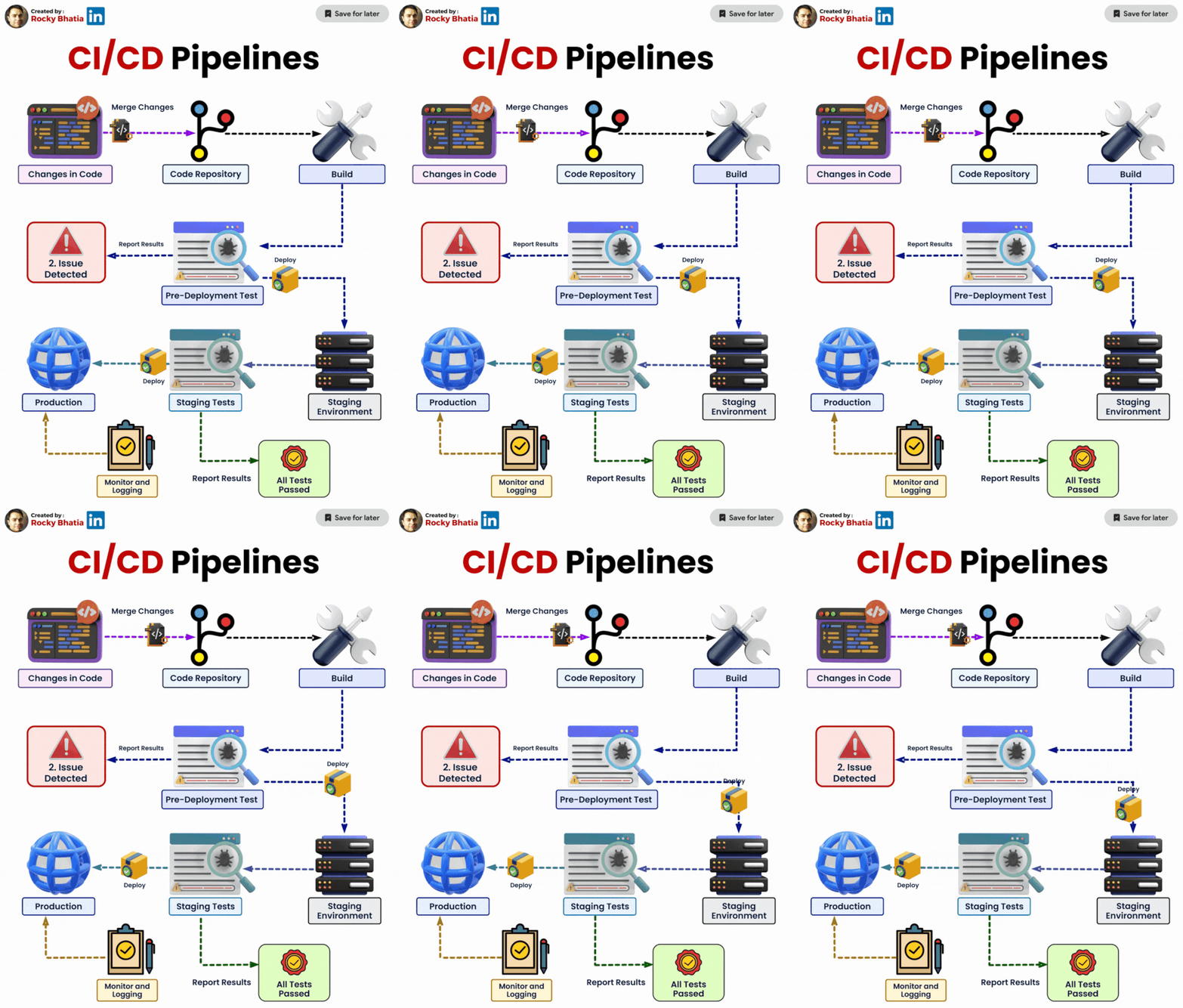
Understanding CI/CD
Continuous Integration (CI): Regularly merges code changes, detects integration issues, and ensures a functional codebase.
Continuous Delivery (CD): Automates delivery, enabling rapid and reliable deployments to staging or production.
Key Components:
Changes in code trigger automated builds.
Comprehensive testing in staging ensures reliability.
Successful builds are deployed to production.
Why CI/CD is Essential:
Accelerates time-to-market.
Reduces manual errors with automation.
Ensures consistency across environments.
Provides rapid feedback for iterative development.
Best Practices for Scaling CI/CD
Start small: Begin with one pipeline and expand.
Educate teams: Invest in training on CI/CD tools and practices.
Foster collaboration: Align development and operations teams.
Automate: Leverage automation to streamline processes.
Monitor metrics: Track deployment frequency, lead time, and test coverage.
Conclusion
DevOps and CI/CD pipelines have revolutionised software delivery by automating processes, fostering collaboration, and enhancing reliability. By adopting practices like GitOps, blue-green deployments, and AI-driven monitoring, organisations can stay agile and competitive. Embracing this cultural transformation is not just about using tools—it’s about fostering a mindset of continuous improvement, collaboration, and adaptability.
As technology evolves, the role of DevOps in delivering innovative solutions will only grow. Mastering these practices ensures you’re ready to tackle tomorrow’s challenges in a fast-paced digital world.
Hope you enjoyed reading this article.
If you found it valuable, hit a like and consider subscribing for more such content every week.
If you have any questions or suggestions, leave a comment.
This post is public so feel free to share it.
Subscribe for free to receive new articles every week.
Thanks for reading Rocky’s Newsletter ! Subscribe for free to receive new posts and support my work.
I actively post coding, system design and software engineering related content on
Spread the word and earn rewards!
If you enjoy my newsletter, share it with your friends and earn a one-on-one meeting with me when they subscribe. Let's grow the community together.
I hope you have a lovely day!
See you soon,
Rocky