

Data Pipelines in the Cloud: Azure, AWS & GCP

Introduction
In the era of big data, setting up data pipelines on cloud platforms has become crucial for organisations seeking to leverage their data effectively.
Whether you're working with Microsoft Azure, Amazon Web Services (AWS), or Google Cloud Platform (GCP), each cloud provider offers distinct tools and services to manage data pipelines efficiently.
This guide walks you through the complexities of data pipelines across these leading cloud platforms, helping you make informed decisions tailored to your needs.
Understanding Data Pipelines
What Are Data Pipelines?
Data pipelines are a series of processes that automate the collection, movement, and transformation of data from various sources to destinations. They ensure that raw data is processed and made available for analysis, reporting, and decision-making. The pipeline manages everything from data ingestion to data processing, storage, and presentation.
Key Components of Data Pipelines
1. Data Ingestion: The process of collecting data from various sources.
2. Data Lakes: Central repositories that store vast amounts of raw data.
3. Data Processing: Transforming raw data into usable formats.
4. Data Warehousing: Structured storage optimized for querying and analysis.
5. Presentation Layer: Visualisation and reporting tools that make data insights accessible.
Why Use Cloud Platforms for Data Pipelines?
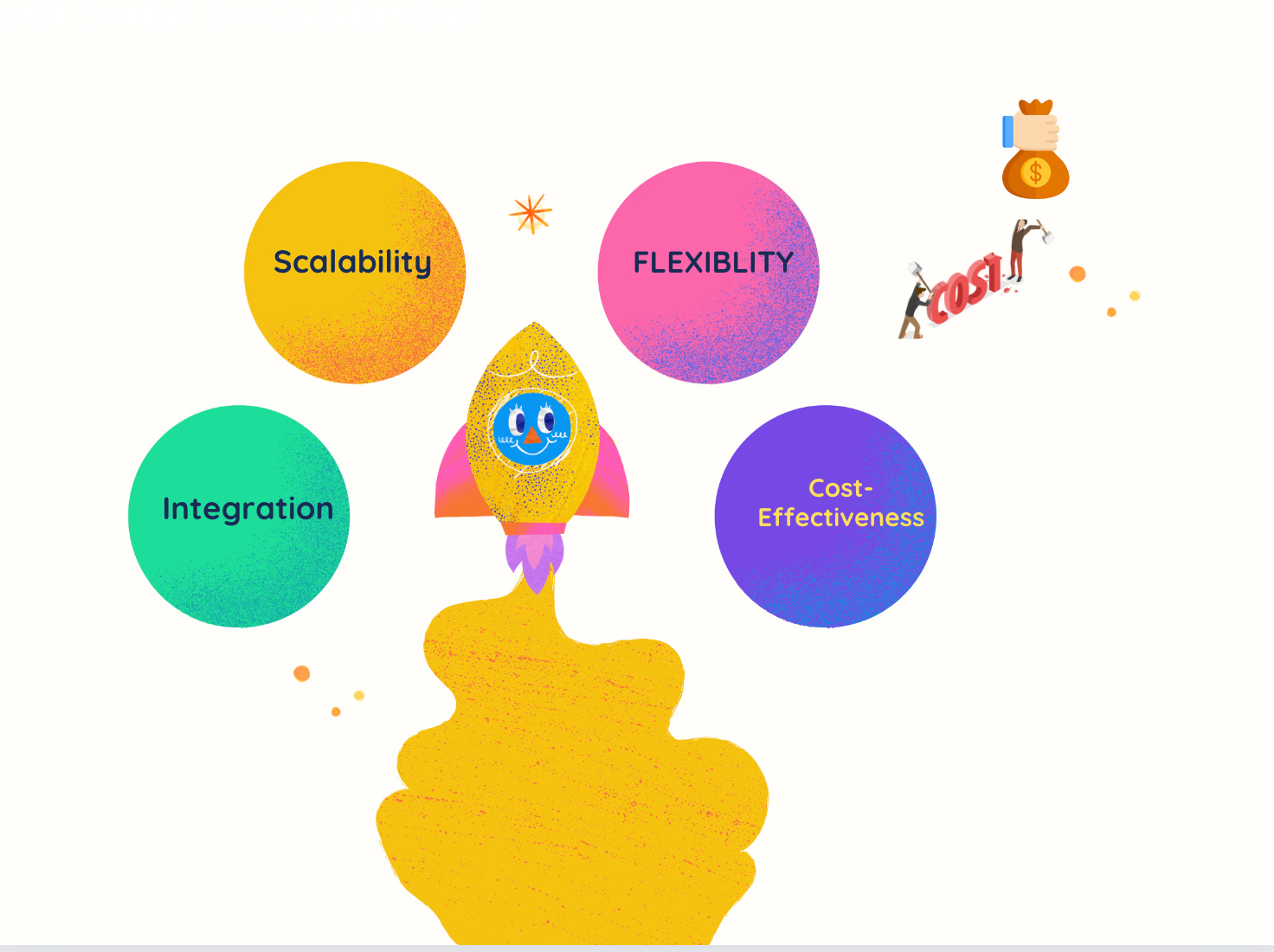
Scalability and Flexibility
Cloud platforms offer on-demand scalability, allowing you to handle growing data volumes without worrying about infrastructure limitations.
Cost Effectiveness
Cloud platforms typically operate on a pay-as-you-go model, which helps businesses manage costs efficiently. By only paying for the resources you use, you can optimize spending and avoid the hefty upfront costs associated with on-premises infrastructure.
Integration with Other Services
Each cloud platform provides seamless integration with various other services like AI, machine learning, and data analytics, enhancing the capabilities of your data pipelines.
Data Pipeline Components Across Cloud Platforms
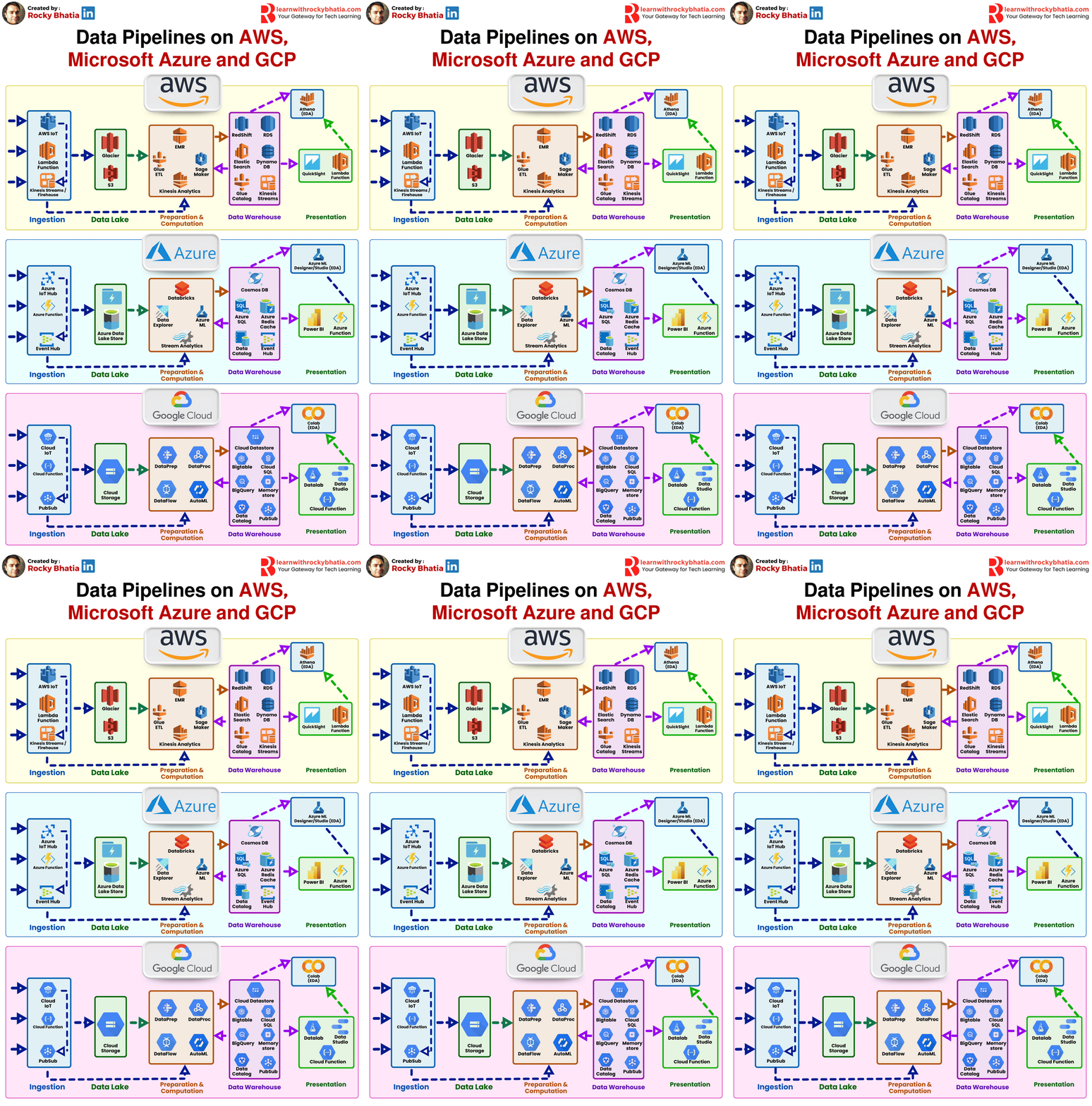
The original credit of the above diagram goes to Satish Chandra Gupta , i recreated for better visualisation
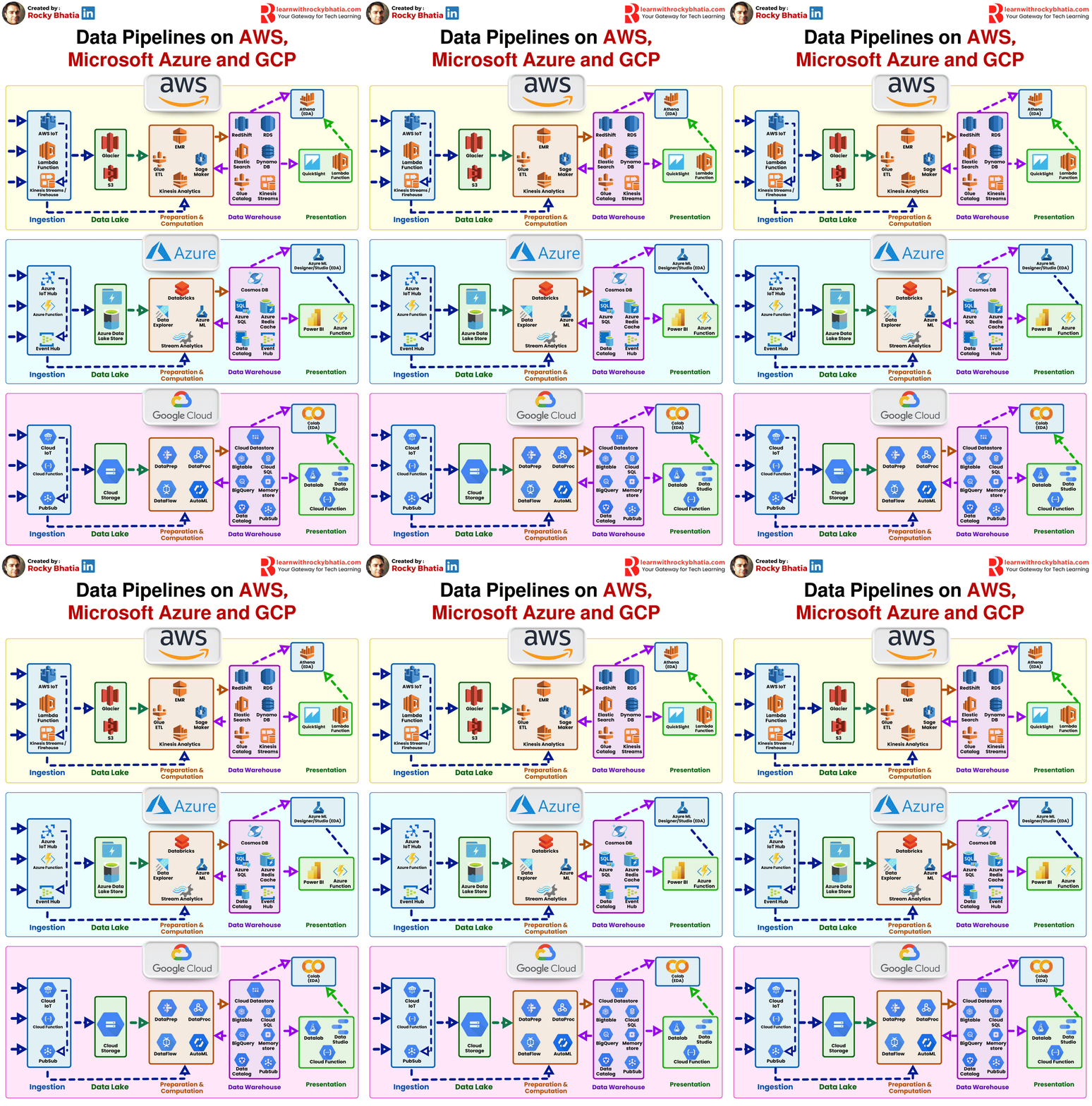
Data Ingestion
- Azure: Utilizes Data Factory for efficient data collection.
- AWS: Offers Data Pipeline and Kinesis for scalable ingestion.
- GCP: Employs Dataflow and Pub/Sub for real-time streaming.
Data Lakes
- Azure: Features hierarchical namespace with Azure Data Lake Storage.
- AWS: Simplifies data lake management with Lake Formation.
- GCP: Facilitates cross-cloud analytics with BigQuery Omni.
Data Processing
- Azure: Accelerates processing with Azure Databricks.
- AWS: Prepares and transforms data effortlessly with Glue.
- GCP: Enhances data preparation with user-friendly Dataprep by Trifacta.
Data Warehousing
- Azure: Integrates warehousing and analytics with Synapse Analytics.
- AWS: Ensures efficient large-scale analysis with Redshift.
- GCP: Offers a serverless, scalable solution with BigQuery.
Presentation Layer
- Azure: Power BI transforms data into actionable insights with rich visualizations.
- AWS: QuickSight delivers ML-powered insights for all users, enhancing business intelligence.
- GCP: Data Studio offers easy-to-use reporting and analytics, turning data into informative, customizable reports and dashboards.
Best Practices for Building Cloud-Based Data Pipelines
Security Considerations
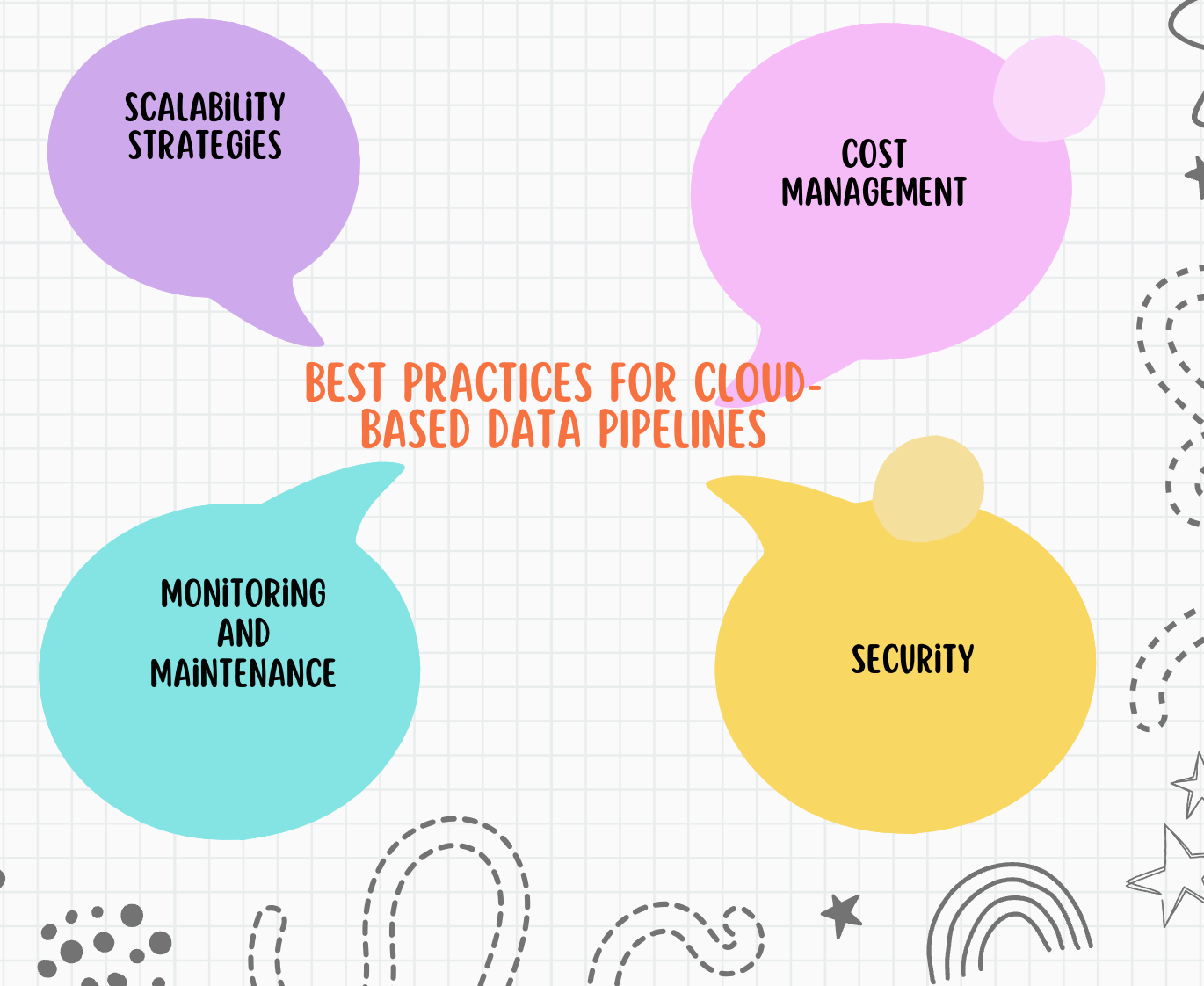
Security should be a top priority when building data pipelines in the cloud. Implement robust encryption for data at rest and in transit, and make use of each platform’s security services.
Cost Management
Consider using reserved instances or committed use contracts to reduce costs for long-term workloads.
Use cost monitoring tools like Azure Cost Management, AWS Cost Explorer, or GCP’s Cloud Billing to track and optimize your spending.
Scalability Strategies
Take advantage of auto-scaling features available on all three platforms to handle variable workloads. Implement a modular architecture that allows you to scale individual components independently based on demand.
Monitoring and Maintenance
Continuous monitoring and regular maintenance are crucial for ensuring the smooth operation of data pipelines.
Challenges in Setting Up Data Pipelines
Data Governance and Compliance
Ensuring data governance and compliance can be challenging, especially when dealing with sensitive data across multiple regions. Use data cataloging tools, access controls, and compliance management services provided by each cloud platform to maintain data integrity and meet regulatory requirements.
Data Integration Complexity
Integrating data from diverse sources can be complex, particularly when those sources are spread across different environments. Employ ETL/ELT tools and services designed to handle multiple data formats and sources to simplify integration and reduce errors.
Real-Time Data Processing
Real-time data processing demands low-latency pipelines and rapid scaling capabilities. While each platform offers services designed for real-time processing, fine-tuning these pipelines to meet specific performance requirements can be challenging.
Future Trends in Cloud-Based Data Pipelines
AI and Machine Learning Integration
The integration of AI and machine learning into data pipelines is becoming increasingly prevalent. Services like Azure Machine Learning, AWS SageMaker, and Google AI Platform enable organizations to build predictive models directly within their data pipelines, automating decision-making and improving outcomes.
Hybrid and Multi-Cloud Strategies
As businesses diversify their cloud strategies, hybrid and multi-cloud data pipelines are gaining traction. Tools like Azure Arc, AWS Outposts, and Google Anthos allow for seamless integration and management across on-premises and multiple cloud environments.
Serverless Architectures
Serverless data pipelines are the future, offering a fully managed environment where you only pay for what you use. AWS Lambda, Azure Functions, and Google Cloud Functions are leading the way in serverless computing, enabling highly scalable and cost-efficient pipelines.
Conclusion
Building data pipelines on cloud platforms like Microsoft Azure, AWS, and Google Cloud Platform offers immense opportunities for organisations to harness their data effectively. Each platform provides a unique set of tools and services that cater to various data processing needs, from ingestion to visualisation. By understanding the strengths and capabilities of each platform, you can design and implement a data pipeline that not only meets your current needs but also scales with your business.
FAQs
1. What is the most cost-effective cloud platform for data pipelines?
The cost-effectiveness of a cloud platform depends on your specific use case, data volume, and processing needs. AWS offers a wide range of pricing options, while GCP provides competitive pricing for large-scale analytics with BigQuery. Azure’s pricing is flexible and integrates well with existing Microsoft ecosystems.
2. How do I ensure data security in cloud-based pipelines?
To ensure data security, implement encryption for data at rest and in transit, use identity and access management (IAM) policies, and regularly audit your cloud environment for vulnerabilities. Each platform provides security services that can be tailored to meet your needs.
3. Can I integrate on-premises data with cloud pipelines?
Yes, all three cloud platforms—Azure, AWS, and GCP—offer tools to integrate on-premises data with cloud environments. Azure Data Factory, AWS Direct Connect, and Google Cloud Interconnect are some of the services that facilitate hybrid cloud deployments.
4. Which cloud platform is best for real-time data processing?
For real-time data processing, AWS with Kinesis and GCP with Pub/Sub are particularly strong. Azure also offers robust real-time processing with Azure Stream Analytics. The choice depends on your specific requirements and existing infrastructure.
5. How do I monitor and maintain data pipelines on the cloud?
Monitoring and maintenance are key to a successful data pipeline. Use Azure Monitor, AWS CloudWatch, or Google Cloud Monitoring to track performance metrics, set up alerts, and automate maintenance tasks to ensure high availability and reliability.
Rocky rocks :-)